Media
For decades, Africa’s place in the global imagination has often been narrower than the continent itself. Wars, political crises, poverty and humanitarian emergencies have occupied a disproportionate share of international attention, while another Africa, one of industrial ambition, expanding companies, creative industries, infrastructure and entrepreneurship, has often struggled to receive comparable visibility.
Dangote Industries Limited is now investing in helping that other story travel further.
In August 2026, the African industrial group announced a multiyear partnership with CNN International Commercial built around a global, multiplatform campaign showcasing African business and economic transformation. The collaboration combines the sponsorship of CNN International’s new programme Africa Inc. with Africa First, a branded content series produced by CNNIC’s in house studio Create, as well as sponsorship of three editions of CNN’s Global Perspectives events franchise over the following 12 months.
The significance of the partnership extends beyond corporate communication. It brings together one of Africa’s most consequential industrial groups and one of the world’s most recognisable international media brands around a larger proposition, that African economic ambition deserves a more prominent place in the global conversation.
Putting African Business at the Centre
At the heart of the partnership is Africa Inc., a new half hour programme airing on CNN International and hosted by journalist Adefemi Akinsanya. Sponsored by Dangote Industries, the programme explores African companies competing and growing across technology, hospitality, manufacturing, entertainment and other sectors.
The framing is important. African companies are not presented simply as promising businesses operating in an emerging continent, but as actors participating in global commerce, innovation and consumer trends.
Alongside the programme, Africa First takes the conversation into industrialisation. Produced as branded content by CNN Create, the series explores Africa’s progress towards greater energy independence and economic transformation, with Dangote Industries providing one of the continent’s most compelling examples of what industrial ambition can look like at scale.
The campaign has considerable reach. Content will appear across CNN International, CNN.com, CNN Arabic and CNN Business channels on Facebook, Instagram and LinkedIn, while Africa First will also receive television and digital distribution through CNN in the United States.
For Dangote, this represents more than visibility. It places an African industrial story before international audiences of executives, investors, policymakers and consumers who help shape perceptions of the continent.
From Industrial Power to Narrative Power
Few African companies are better positioned to carry such a message.
Dangote Industries has become one of the continent’s most important industrial groups, with major activities across cement, sugar, salt, fertiliser, petroleum and other sectors. Its scale reflects a wider ambition that has animated African economic policy for decades, producing and transforming more on the continent itself.
The Dangote Petroleum Refinery is perhaps the clearest physical expression of that ambition. Located in the Lekki Free Zone in Lagos, the complex has a capacity of 650,000 barrels per day and represents a major expansion of refining capacity within Africa.
Its symbolism is powerful.
For generations, one of the paradoxes of many African economies has been their ability to export natural resources while importing significant quantities of the finished products derived from them. Industrialisation offers a different model, creating more value locally, developing expertise, building supply chains and increasing African productive capacity.
This is why the language chosen by Dangote for the CNN partnership matters. Anthony Chiejina, the group’s Chief Branding & Communications Officer, described the collaboration as part of its global brand positioning drive and presented Africa First as a new paradigm in communicating Africa’s industrialisation journey.
In that sense, Dangote is doing something increasingly important for African soft power, making industrial capability visible.
The Economic Value of a Better Narrative
The need for broader representation of African economies is not simply a matter of pride. Research increasingly suggests that perceptions can have economic consequences.
A 2024 study by Africa Practice and Africa No Filter examined international media coverage of African countries and sought to estimate the financial consequences of persistent negative stereotypes. Its conclusion was striking, biased media narratives could be contributing as much as US$4.2 billion annually in additional sovereign borrowing costs for African countries.
The deeper issue is one of balance. Political instability, poverty and conflict are realities and should be reported as such. But when they become dominant reference points for a continent of more than 50 countries, they can obscure the extraordinary diversity of what is also happening across African economies.
That reality includes industrial groups such as Dangote, technology ecosystems in cities including Lagos, Nairobi and Cape Town, expanding creative industries, major infrastructure projects, growing consumer markets and a generation of African companies increasingly looking beyond their domestic borders.
Narrative, in this context, becomes part of economic competitiveness.
Investors, companies and consumers rarely make decisions in an informational vacuum. Their perceptions of countries and regions accumulate through headlines, images, conversations and stories over many years. Expanding the range of African stories available internationally can therefore expand the range of possibilities audiences associate with Africa itself.
Dangote as an African Soft Power Asset
This is where Dangote’s significance extends beyond conventional corporate branding.
The world’s most influential companies frequently become ambassadors for the capabilities of the places from which they emerge. Toyota and Sony have contributed to international perceptions of Japanese manufacturing and technological sophistication. Samsung and Hyundai have become part of South Korea’s image as a globally competitive innovation economy. American technology companies continually reinforce perceptions of the United States as a centre of entrepreneurship and technological disruption.
Companies become evidence of what countries can build.
Africa needs more globally visible corporate brands capable of performing a similar function, and Dangote is increasingly one of them.
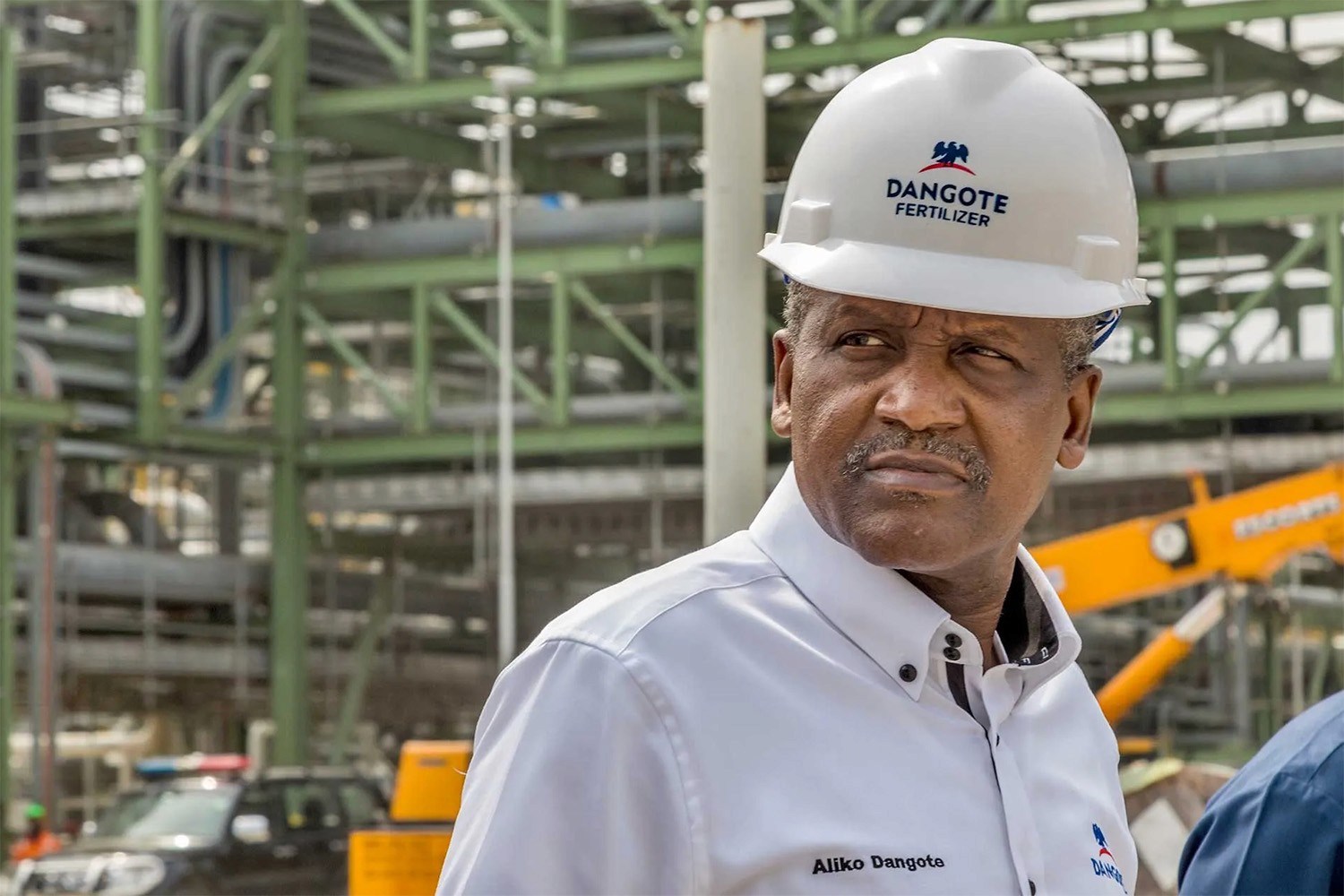
Its cement plants, fertiliser production and refinery provide tangible evidence that African companies can conceive and execute industrial projects at extraordinary scale. When those achievements become internationally visible, the reputational benefit can extend beyond one corporation or one country.
They expand perceptions of African capability.
That is a form of soft power that deserves greater attention. Culture, music, fashion and sport are familiar instruments of international influence, but industrial achievement can also generate admiration, credibility and confidence. A factory may not possess the emotional appeal of a song or a football team, but it can communicate something equally valuable, competence, ambition and the ability to execute.
Why Global Media Matters
This makes CNN a strategically powerful platform.
International perceptions are rarely transformed by a single advertising campaign. They change through repeated exposure to different information over time.
Africa Inc. can contribute to that process by placing African companies within the language of international business rather than treating them principally through the vocabulary of development. Africa First, meanwhile, provides Dangote with an opportunity to tell a broader story about industrialisation, energy and African economic agency through sophisticated global storytelling.
The distinction between the two formats is important. Africa Inc. is a CNN programme sponsored by Dangote, while Africa First is branded content produced by CNN International Commercial’s Create studio. Together, they form part of a wider ecosystem capable of bringing African economic stories to audiences across television, digital media, social platforms and international events.
The ambition is therefore larger than placing a corporate logo before millions of viewers. It is about placing African enterprise, African ambition and African capability before them.
From an Africa of Potential to an Africa That Builds
Perhaps the most interesting dimension of the partnership is the shift in vocabulary it represents.
Africa has spent decades being described as emerging, promising or as the continent of the future. Such descriptions can sound flattering, but they also have a limitation, they perpetually locate African achievement somewhere ahead rather than recognising what already exists.
Dangote offers a different narrative.
A refinery with a capacity of 650,000 barrels per day exists in Lagos. Large scale African cement production exists. African manufacturing exists. African companies operating across borders exist. The continent’s economic transformation remains unfinished, but its story can no longer be told exclusively through the language of potential.
Increasingly, it is also a story of execution.
That distinction matters for Africa’s international image.
Strong reputations are ultimately built on proof. Countries and continents become associated with innovation, design, culture or industrial excellence because audiences repeatedly encounter products, companies and people that substantiate those associations.
Dangote provides Africa with that kind of proof.
Its partnership with CNN International Commercial therefore represents something larger than a communications agreement between two organisations. It demonstrates how a major African corporation can use its scale not only to build factories, infrastructure and businesses, but also to help broaden the international narrative surrounding the continent that produced it.
For too long, discussions about rebranding Africa have focused primarily on correcting misconceptions. Dangote points towards a more ambitious approach, creating achievements of global significance and ensuring that those achievements become part of the global conversation.
Africa’s next chapter will be written through infrastructure, companies, technology, culture and ideas. As one of the continent’s most ambitious industrial groups, Dangote is helping ensure that this story reaches the world.
