Music
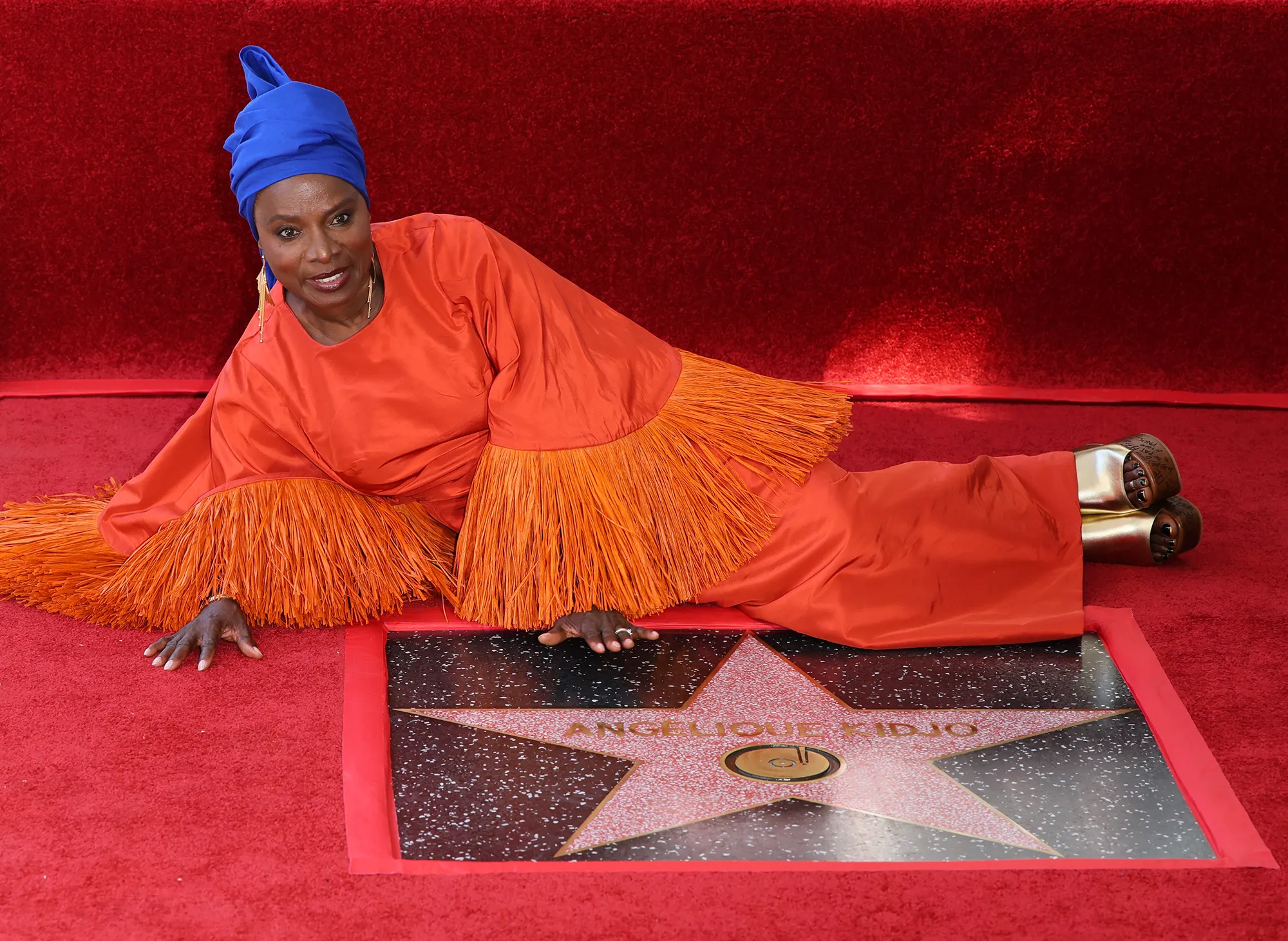
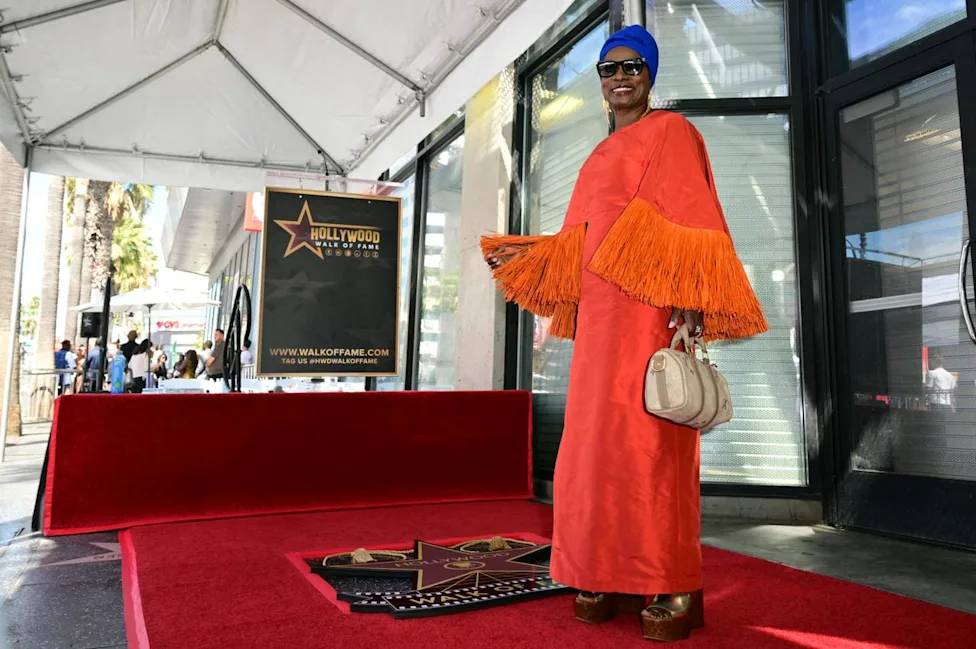
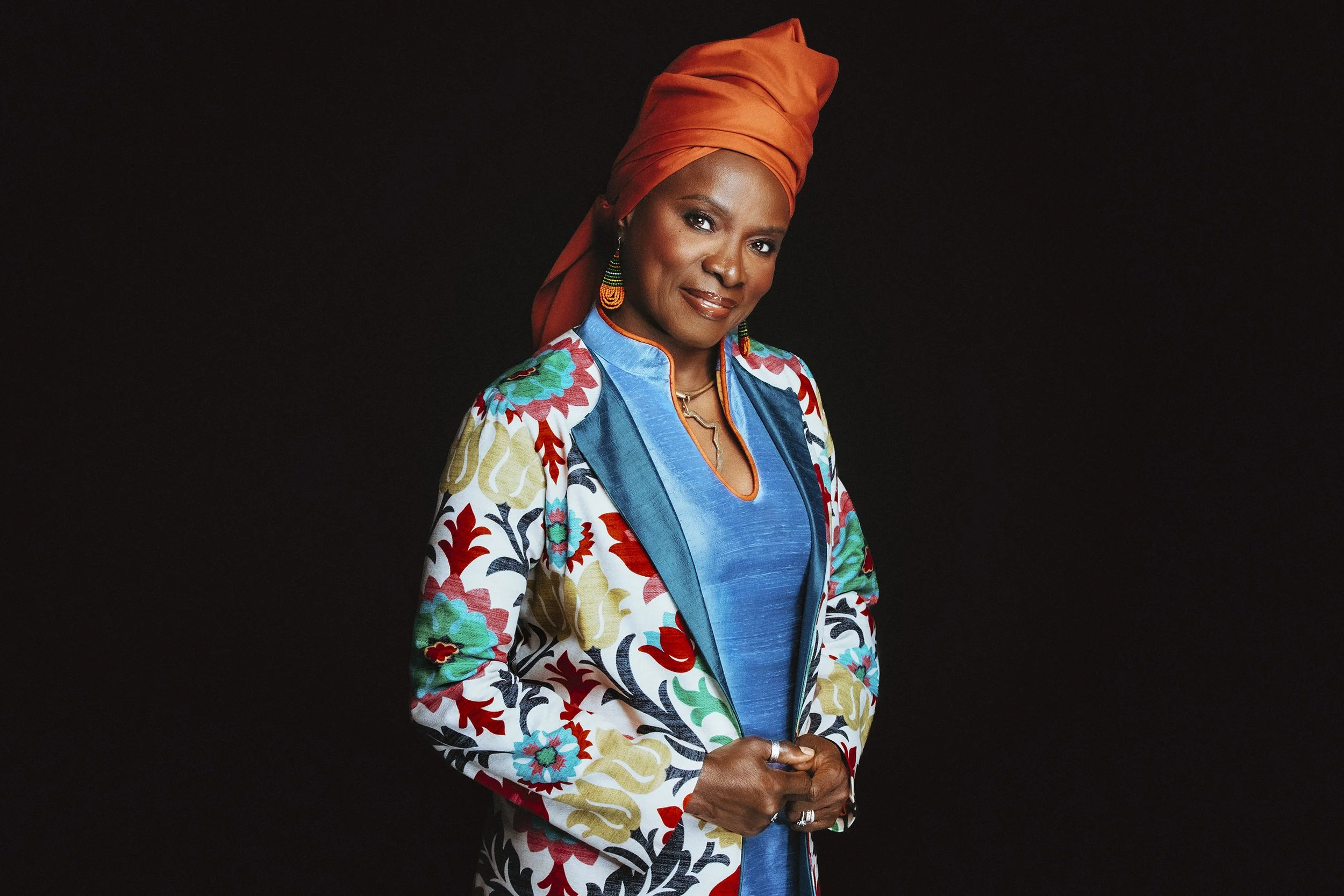
On a stretch of Hollywood Boulevard where the names of some of the world’s most famous entertainers are set into terrazzo and brass, a new one appeared on August 18, 2026: Angélique Kidjo.
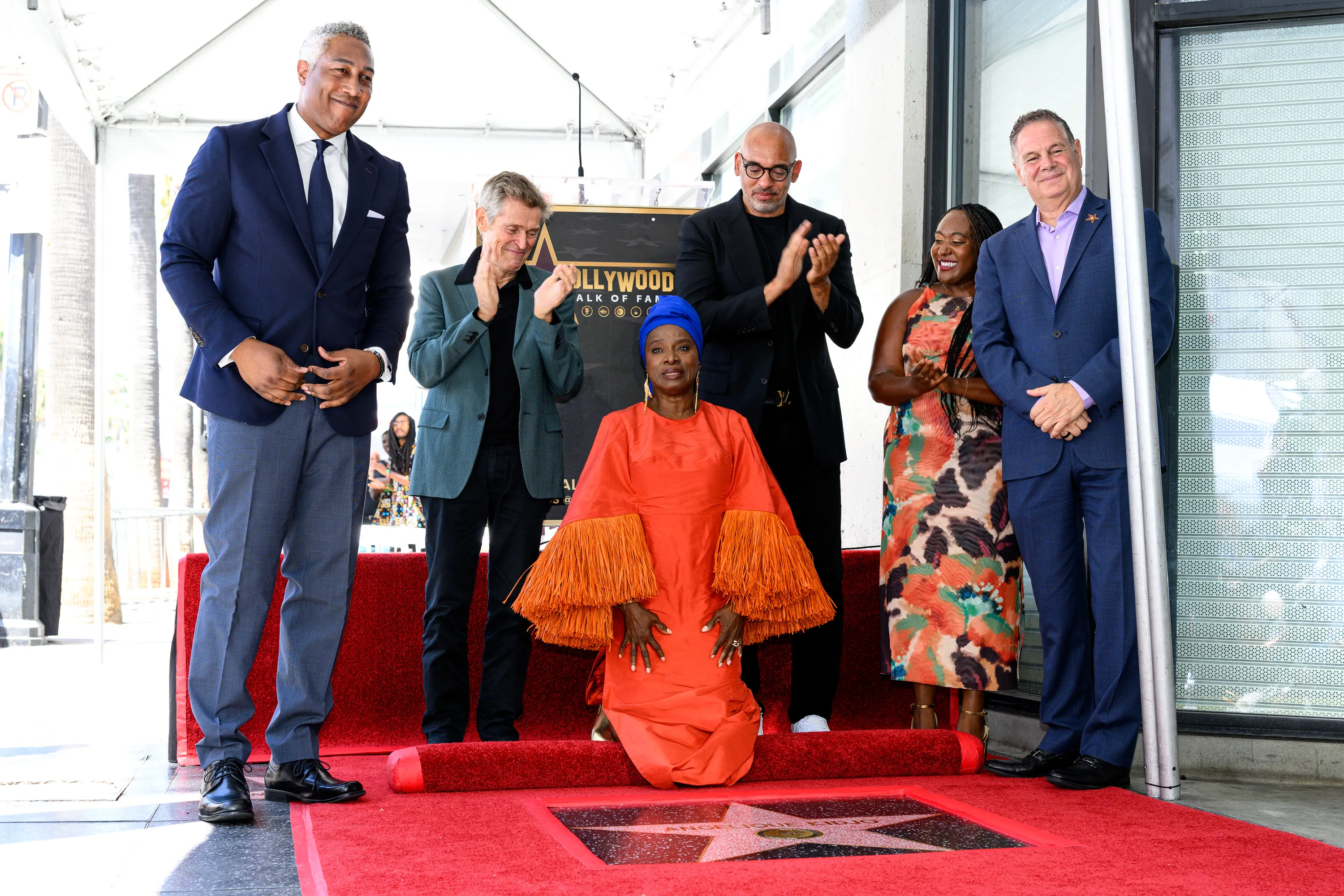
The Beninese singer received the 2,854th star on the Hollywood Walk of Fame, in the Recording category, at 7011 Hollywood Boulevard. Willem Dafoe and Harvey Mason Jr., chief executive of the Recording Academy and MusiCares, spoke at the ceremony. The Hollywood Chamber of Commerce described Kidjo as the first African musician and first Black African to receive a star.
It was an individual honour, the culmination of a career stretching across more than four decades. But it was difficult to see only an individual story in it.
Kidjo arrived on Hollywood Boulevard carrying a history much larger than herself: the musical traditions of Benin and West Africa, the creative ferment of 1980s Paris, the long cultural conversation between Africa and its diasporas, and the trajectory of African musicians who spent decades pushing their way into an international music industry in which the continent was influential long before its artists were proportionately visible.
For Benin, the moment offered something else as well: a reminder that a country’s international image is not constructed only by governments, advertising campaigns or tourism slogans.
Sometimes, a nation travels through a voice.
A Beninese Name on Hollywood Boulevard
The Walk of Fame is, at one level, an American institution. Created in 1960 and administered by the Hollywood Chamber of Commerce for the City of Los Angeles, it has become part monument, part tourist attraction and part physical archive of the entertainment industry.
But Hollywood has never been merely local.
For much of the past century, it has functioned as one of the great factories of global popular culture. Its films, celebrities, music, symbols and mythology have circulated across borders with an influence few cultural centres have matched.
That makes inclusion there particularly resonant for artists whose careers began far from Los Angeles.
Kidjo’s star is significant not because Hollywood confers legitimacy on African music. African music hardly requires such validation. Its traditions have shaped musical cultures across the Atlantic world for centuries, and contemporary African artists increasingly command global audiences on their own terms.
What the star provides instead is visibility inside a powerful global institution of cultural memory.
Kidjo’s name is now physically inscribed in a place visited by millions of people from around the world. And the institution placing it there explicitly identifies her with Africa and with the historical nature of the recognition.
Symbols like these matter because cultural influence is partly a struggle over presence: whose names are remembered, whose stories enter institutions and whose achievements become part of the international cultural canon.
On August 18, an African name entered that landscape in a new way.
The Making of a Global Artist
Long before Hollywood, there was Cotonou.
Kidjo was born in 1960, the year Dahomey, as Benin was then known, gained independence from France. She grew up in a large family immersed in music, theatre and cultural traditions. Her father was Fon and her mother Yoruba, placing her childhood at the intersection of two of the major cultural worlds of southern Benin and neighbouring Nigeria.
The music around her was already international.
She listened to traditional Beninese sounds but also to soul, jazz, rock, Afrobeat and the music circulating across the Atlantic. Miriam Makeba became an early influence. So did Jimi Hendrix. Fela Kuti’s Afrobeat belonged to the neighbouring Nigerian cultural universe. Kidjo was growing up in a West Africa whose musical imagination was simultaneously local, regional and global.
Her first success came at home. With the school band Les Sphinx, she recorded a version of a Miriam Makeba song that became a national radio hit. Her early album Pretty found an audience in West Africa.
Then politics intervened.
Benin had undergone a profound transformation after the 1972 coup that brought Mathieu Kérékou to power. The country subsequently adopted Marxism-Leninism and became the People’s Republic of Benin. For a young artist seeking independence of expression, the political environment became increasingly constraining.
Kidjo left for Paris in the early 1980s.
That departure would prove decisive.
Paris and the African Musical Metropolis
Paris in the 1980s was becoming one of the principal international crossroads for African music.
Migration, the cultural relationships left by colonial history and the growth of independent labels, clubs, record stores and studios had created an ecosystem in which musicians from across Francophone Africa and beyond could encounter one another.
The neighbourhoods of Barbès and La Goutte-d’Or became important nodes in that world. African musicians moved through venues, studios and record shops, while a generation of artists including Manu Dibango, Salif Keita and others helped make African music increasingly visible to European audiences.
Kidjo entered this environment first as a student and working musician.
She studied jazz at the CIM in Paris, sang with other groups and eventually became the lead singer of the jazz-rock ensemble Pili Pili. By the end of the decade, she had established herself on the Paris music scene.
Then came Chris Blackwell.
The founder of Island Records, whose label had played a central role in bringing artists including Bob Marley to international audiences, signed Kidjo in 1991. Her album Logozo followed, featuring musicians including Branford Marsalis and Manu Dibango.
Songs such as “Agolo”, “Batonga” and “Wombo Lombo” would help establish her distinctive international identity.
What followed was not simply an African artist adapting herself to Western popular music. Kidjo increasingly built her career around movement in the opposite direction as well: demonstrating how deeply supposedly separate musical worlds were already connected.
The Atlantic Is Part of the Story
To understand Kidjo’s music is also to understand something about the Atlantic.
For centuries, people were forcibly transported from the coasts of West and Central Africa to the Americas through the transatlantic slave trade. Along with the catastrophic human consequences of that history came the displacement, survival and transformation of languages, religious practices, culinary traditions and music.
The region that includes present-day Benin occupies a particularly important place in that history.
Over generations, African musical structures and sensibilities survived and evolved throughout Brazil, Cuba, Haiti, the Caribbean and the United States. They became part of new musical traditions that would eventually travel around the world — sometimes returning to Africa in transformed forms.
Kidjo’s career repeatedly explores that circulation.
Her 2002 album Black Ivory Soul examined connections between Benin and Brazil. Her 2019 album Celia reimagined the repertoire of Cuban singer Celia Cruz through an African musical perspective. Cruz herself had performed in Benin in the 1970s, another episode in the extraordinary musical circulation between Africa and the Americas.
Kidjo also reinterpreted Talking Heads’ landmark album Remain in Light, a record whose sound had itself been shaped by the group’s engagement with African musical ideas.
These projects make her work unusually rich from a soft-power perspective.
She does not simply export Beninese or African culture. She reveals connections that already exist.
The direction of cultural influence becomes circular rather than linear: Africa to the Americas, the Americas back to Africa, and both into a global musical vocabulary.
When Culture Becomes Soft Power
The political scientist Joseph Nye popularised the concept of “soft power” to describe the ability to influence others through attraction rather than coercion or payment.
Culture is one of its most powerful sources.
But cultural soft power rarely behaves like a conventional government programme. It is often decentralised, unpredictable and carried by people who may have no official relationship with the state whose image they influence.
Musicians are particularly effective actors in this system because music crosses linguistic and political boundaries with unusual ease.
Bob Marley became inseparable from international perceptions of Jamaica. The global rise of K-pop changed the cultural visibility of South Korea. Brazilian music helped build an international imaginary around Brazil long before contemporary nation-branding terminology existed. Fela Kuti made Lagos a reference point in the global history of modern African music.
None of those cultural phenomena can be reduced to tourism marketing.
That is precisely why they are powerful.
Angélique Kidjo occupies a comparable space for Benin.
She does not represent the country because a government appointed her to do so. She represents something about it because audiences repeatedly encounter Benin through her story, her music, her languages and her references.
That distinction is fundamental.
Credible soft power is often most effective when it does not look like communication.
Five Grammys and a Cultural Institution
By the time Kidjo reached Hollywood Boulevard, the case for her international stature had been built over decades.
The Recording Academy lists five Grammy wins and 16 nominations across her career. Her winning albums include Djin Djin, Eve, Sings, Celia and Mother Nature.
The progression of those albums also tells a story about the changing position of African music internationally.
Kidjo was nominated for a Grammy as early as 1995, when “Agolo” received a nomination for Best Music Video. Her first Grammy victory came in 2008 with Djin Djin. Four more followed.
In 2023, Sweden’s Polar Music Prize placed her alongside Chris Blackwell and Estonian composer Arvo Pärt among that year’s laureates. The prize, presented by King Carl XVI Gustaf, recognised a career that had moved persistently between languages, continents and genres.
These honours matter beyond the accumulation of trophies.
Cultural power depends in part on institutions. Grammys, museums, festivals, universities, major newspapers, concert halls and cultural prizes participate in deciding which artists enter global memory.
For decades, African artists were frequently present as influences while remaining less visible inside the institutions that defined the mainstream international canon.
Kidjo’s trajectory charts part of the gradual correction of that imbalance.
From Miriam Makeba to a New African Generation
There is also a lineage here.
Kidjo has frequently cited Miriam Makeba, the South African singer who became one of the first African musical superstars of the modern international era, as an important influence.
Makeba’s career demonstrated decades earlier how an African artist could become something larger than an entertainer. Exiled from apartheid South Africa, she became a cultural figure whose music, identity and political advocacy introduced international audiences to an African story that governments could not control.
Kidjo belongs to a later generation, but the comparison illuminates the role African artists have played as unofficial cultural diplomats.
The difference today is scale.
African music is experiencing a period of extraordinary international expansion. Afrobeats, amapiano and other African sounds circulate through streaming platforms, stadiums, fashion shows, nightclubs and social media ecosystems with a speed unimaginable when Kidjo began her career.
Burna Boy, Tems, Wizkid, Tyla, Davido, Ayra Starr and other artists belong to a generation for whom global African pop success is increasingly conceivable at a different scale.
Kidjo has deliberately engaged with that generation rather than remaining separate from it.
Her Grammy-winning Mother Nature included collaborations with younger African artists. Her 2026 album HOPE!! continues the dialogue, bringing her together with artists including Davido and Ayra Starr as well as international figures such as Pharrell Williams.
The effect is intergenerational.
Kidjo belongs simultaneously to the history of African music’s difficult international breakthrough and to its current global expansion.
An Ambassador Without a Diplomatic Passport
There is another reason her influence extends beyond music.
Kidjo has used her international platform for advocacy for decades. She has served as a UNICEF Goodwill Ambassador since 2002, working particularly around children’s rights and girls’ education.
She also created the Batonga Foundation, an organisation whose work has focused on girls and young women in Africa.
This has placed Kidjo in spaces very different from recording studios and concert halls: international institutions, development forums and global advocacy campaigns.
The combination matters.
Celebrity alone creates visibility. Credibility creates influence.
Kidjo’s public identity has gradually accumulated associations with musical excellence, African culture, women’s empowerment, education and international engagement. When she is identified as Beninese — as she routinely is in institutional biographies, media coverage and award ceremonies — those associations create reputational spillovers for her country.
They cannot easily be measured in tourist arrivals or investment flows.
But nation brands are built partly from precisely such intangible associations.
The Nation Brand Is Not Owned by the State
This is perhaps the most important lesson of Kidjo’s career for countries thinking seriously about nation branding.
A nation’s reputation does not belong to its government.
It exists in the minds of other people.
Governments can attempt to influence it through diplomacy, tourism campaigns, investment promotion and international communication. But a large part of national reputation is created elsewhere: by citizens, companies, universities, athletes, artists, architecture, cuisine, films, music and the experiences foreigners have with a country.
In this sense, Angélique Kidjo is part of Benin’s nation brand whether or not anyone designed it that way.
For someone who has never visited Benin, she may be a first point of contact with the country.
Then another association may follow: Vodun. The Kingdom of Dahomey. The Amazons of Dahomey. Contemporary art. Ouidah. Cotonou. African heritage. Music.
Nation branding works through the accumulation of these associations.
The strategic question for a country is therefore not how to manufacture cultural icons. That cannot reliably be done.
It is how to recognise them, preserve their stories and build an ecosystem in which their success creates pathways toward discovering the wider country.
From Individual Achievement to National Capital
There is a danger when discussing artists through the vocabulary of nation branding.
A successful musician is not a billboard.
Kidjo’s achievements belong first to Kidjo. Her credibility comes from artistic independence, and any attempt to turn cultural figures into instruments of official messaging can diminish precisely the authenticity that makes them valuable.
The more sophisticated approach is different.
Countries can document their cultural history. They can invest in museums, archives and music education. They can preserve the places associated with major artists. They can create festivals and cultural institutions capable of attracting international audiences. They can integrate music into cultural tourism. They can support younger creators without prescribing what those creators should say.
In other words, the role of public policy is not to manufacture culture for branding purposes.
It is to create the conditions in which culture can flourish — and then make it easier for the world to encounter it.
For Benin, Kidjo represents an extraordinary reservoir of cultural capital.
Her story links Cotonou to Paris, New York, Stockholm and now Hollywood. It connects traditional Beninese culture to jazz, funk, salsa, rock, contemporary African pop and the musical histories of the diaspora.
Few advertising campaigns could construct a narrative that rich.
She built it over a lifetime.
Benin and the Opportunity of Cultural Memory
The opportunity is especially interesting because Kidjo does not stand alone.
Benin possesses cultural assets whose international resonance extends far beyond its geographic size: the history of the Kingdom of Dahomey, the legacy of Vodun, the historical connections between the Bight of Benin and African diasporas, distinctive musical traditions and an increasingly visible contemporary arts ecosystem.
These elements belong to different periods and should never be collapsed into a single simplified national story.
But together they demonstrate something important.
Benin has considerable cultural depth from which to construct international recognition.
Kidjo provides a contemporary human face within that landscape.
Her career can lead audiences backwards into history and forwards into contemporary Beninese creativity. It can connect the country to Africa and simultaneously to the diaspora. It can make a relatively small West African state culturally legible to people who might otherwise struggle to place it on a map.
This is what exceptional cultural figures can do for countries.
They compress geography.
A Star, and Something Larger
There is an appealing symmetry to Angélique Kidjo receiving a star in Hollywood.
She began her career in a newly independent West African country, listening to music that had travelled across continents. She later moved to Paris, joined the African musical renaissance taking place there, signed with one of the great international record labels and spent decades moving between musical traditions that conventional industry categories often kept apart.
Along the way, she won five Grammys, received the Polar Music Prize, worked with musicians across generations and became an international advocate for women and children.
Then, in August 2026, her name entered the pavement of Hollywood Boulevard.
The temptation is to describe the moment simply as another African “first.”
It is more interesting than that.
Kidjo’s star tells us something about the slow redistribution of cultural visibility in the 21st century. African artists are no longer merely contributing influences to global popular culture from its margins. Increasingly, they are occupying its most visible stages, winning its major prizes and entering its institutions of memory.
For Benin, that transformation carries an important lesson.
Countries do not become influential only by being powerful in the conventional sense. They can also become familiar, admired and culturally significant through the people and ideas they give to the world.
Angélique Kidjo has been doing that for Benin for more than four decades.
Hollywood has now put her name in the pavement.
Benin was already in the story.
