Fashion

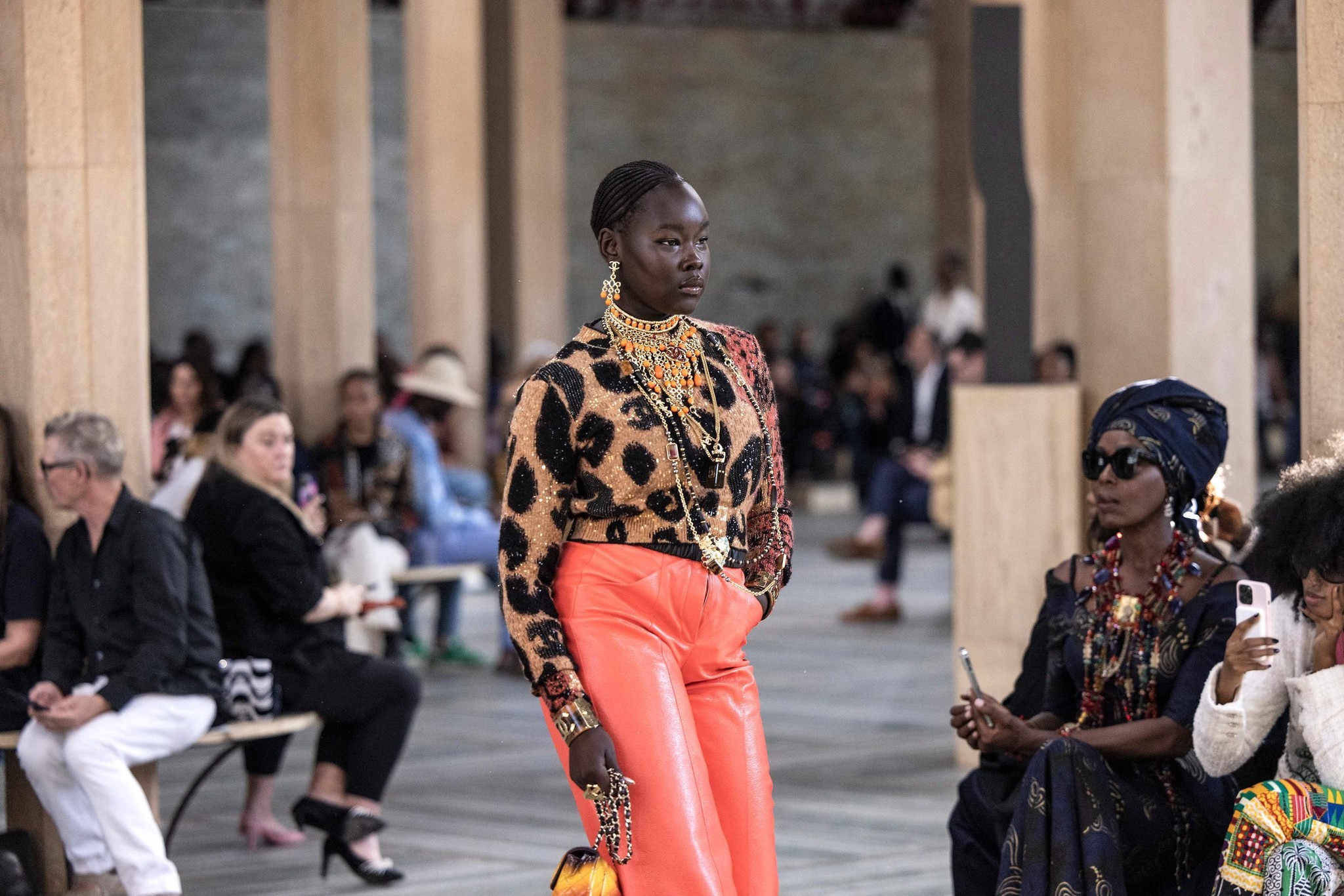
On the evening of December 6, 2022, inside Dakar’s former Palais de Justice, one of the most recognisable names in global luxury did something it had never done before.
Chanel staged a fashion show in Africa.
The French house had chosen the Senegalese capital for its 2022/23 Métiers d’art collection, the annual collection created to celebrate the exceptional craftsmanship at the heart of Chanel. It was the first Chanel show ever held on the continent and, according to the house, the first fashion show staged in Sub Saharan Africa by a luxury fashion house.
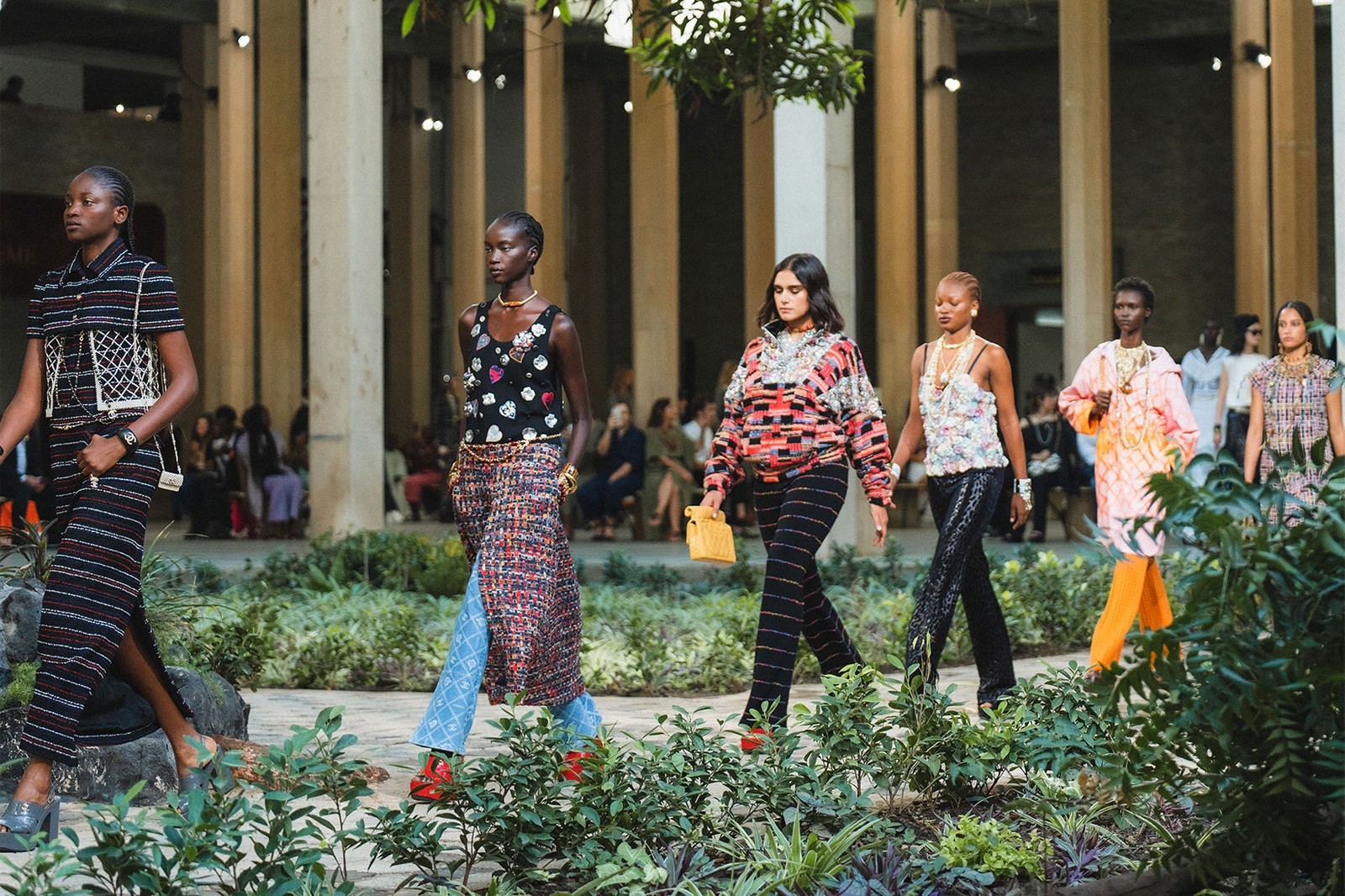
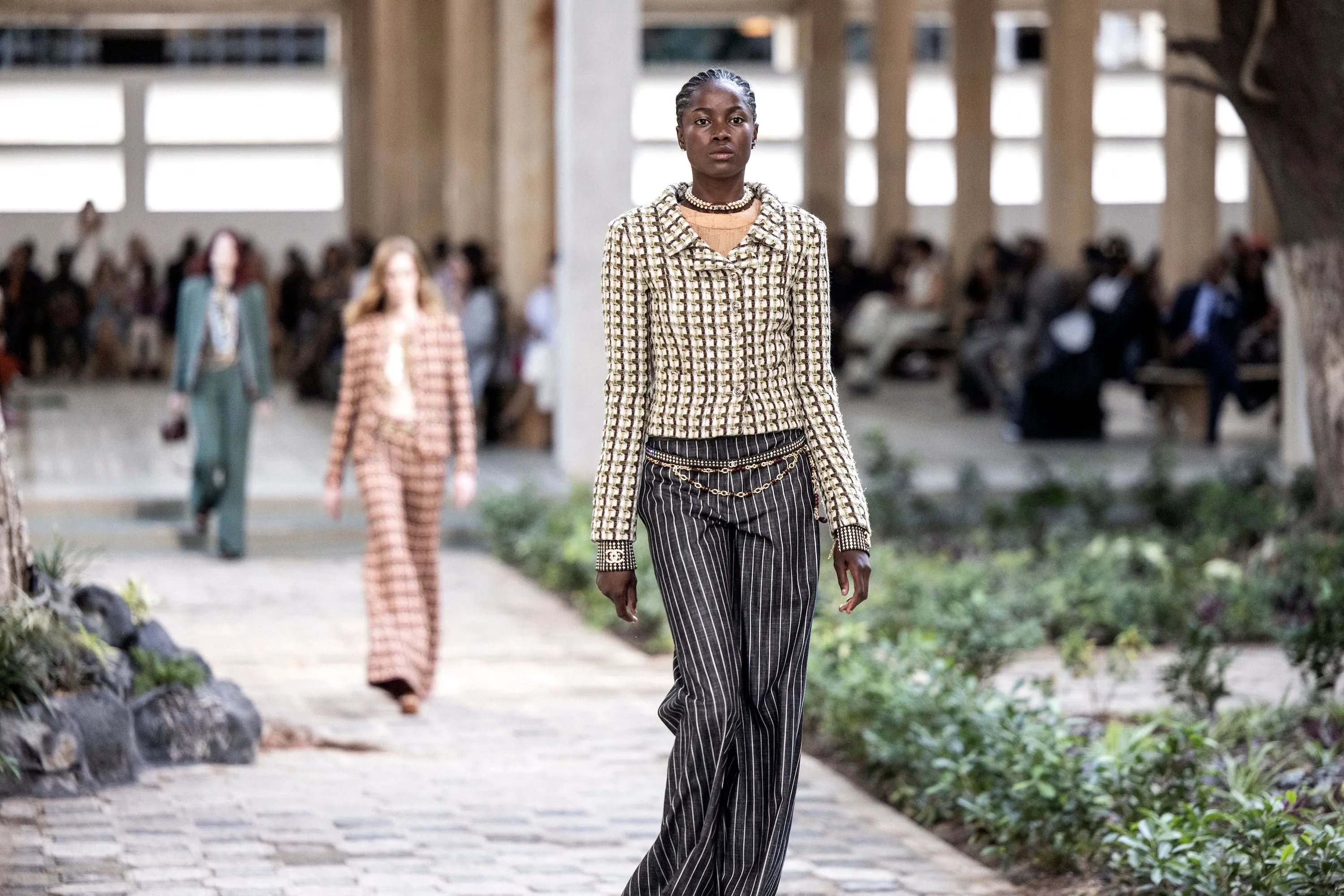
For twenty minutes, models moved through the monumental modernist building in embroidered jackets, vivid tweeds, flowing silhouettes, jewellery and intricate craftsmanship. But the significance of what was happening in Dakar extended well beyond the clothes.
One of the institutions that helped define European luxury had chosen an African city as the setting for one of its most important annual cultural moments.
Dakar was not being represented from Paris.
Paris had come to Dakar.
Why Dakar?
Chanel could have gone almost anywhere.
Its destination shows have travelled through some of the world’s most recognisable cultural capitals and locations. New York, Rome, Edinburgh, Salzburg, Havana and other cities have served as settings through which the house has connected its collections to history, architecture and place.
Dakar represented something different.
The city has occupied an important place in African intellectual and artistic life for generations. Senegal’s first president, Léopold Sédar Senghor, was also a poet and one of the central intellectual figures of Négritude, the movement developed by Black Francophone writers and thinkers including Aimé Césaire and Léon Gontran Damas.
For Senghor, culture was not peripheral to the construction of the postcolonial nation. It was fundamental to it.
In 1966, Dakar hosted the First World Festival of Negro Arts, bringing artists, writers, musicians and intellectuals from Africa and its diasporas to Senegal. Duke Ellington performed. Josephine Baker attended. Artists and thinkers from across the Black world gathered in a newly independent African capital to debate and display their own cultural production.
More than half a century later, Dakar remains an important centre of contemporary African art.
The Dakar Biennale, commonly known as Dak’Art, has become one of the continent’s major contemporary art events. Galleries, designers, photographers, musicians and artists have helped sustain the city’s reputation as a place where African cultural production is not simply exhibited, but debated and reinvented.
When Chanel selected Dakar, it was therefore not placing luxury in a cultural vacuum.
It was entering a city with a cultural history of its own.
The Palais de Justice Becomes a Runway
The location reinforced the symbolism.
Chanel staged the show inside Dakar’s former Palais de Justice, an imposing modernist building completed during the final years of French colonial rule and later used as a venue for the Dakar Biennale.
Architecture that carried one layer of Senegalese history had become a platform for contemporary African art, and now, briefly, for one of the most visible luxury houses in the world.
Around 800 guests attended the show, according to Vogue, including international fashion figures and celebrities. Pharrell Williams, Naomi Campbell and other prominent guests travelled to Dakar.
But Chanel did not want the encounter to be confined to the runway.
Visitors experienced Gorée Island, Senegalese art, design and literature. The programme involved local artists, writers, dancers and cultural figures. Chanel president Bruno Pavlovsky told Vogue Business that simply arriving somewhere for a twenty minute show was no longer sufficient, arguing instead for dialogue and longer term engagement.
That distinction matters.
A luxury house can use a destination merely as scenery.
Dakar was being asked to play a larger role.
Senegal Was Part of the Story
The show opened with Senegalese singer Obree Daman and dancers from the École des Sables, the renowned dance institution founded by Germaine Acogny, one of the most important figures in contemporary African dance.
Senegalese artistic participation extended beyond that opening.
Artists, dancers, writers, stylists and other cultural figures were involved in the wider programme surrounding the collection. Chanel also announced exchanges between le19M, the Paris institution bringing together the specialist craft houses associated with Chanel, and Senegal’s Institut Fondamental d’Afrique Noire.
This made the Dakar project more interesting than the familiar model of a fashion house travelling to an attractive location, photographing a collection and leaving.
It became an encounter between different traditions of craftsmanship and cultural production.
That did not erase the asymmetry between one of the world’s most powerful luxury brands and the local creative ecosystem. Nor did it remove legitimate questions about how European fashion houses engage with African cultures, particularly in countries shaped by colonial histories.
But Chanel appeared conscious of that complexity.
Dakar was not presented simply as an exotic background.
Its cultural actors were visible participants in the moment.
When a City Becomes a Global Stage
From a nation branding perspective, this distinction is crucial.
Cities are partly understood through what happens in them.
Paris has spent generations accumulating associations with couture, art, gastronomy and architecture. Milan possesses fashion and design. Cannes has cinema. Miami has built international visibility around art, architecture and lifestyle.
These associations were not created by slogans alone.
They were built through institutions, events and repetition.
Every major cultural event held in a city produces images. Those images travel through newspapers, magazines, television, Instagram, TikTok and the accounts of the people who attended. Over time, enough of those images can alter the mental geography through which international audiences understand a place.
For several days in December 2022, international fashion media were not simply reporting on Chanel.
They were reporting from Dakar.
Vogue described the show as a milestone. International editors, models, celebrities and photographers circulated images of the city. Fashion audiences who may never previously have considered Senegal encountered Dakar through craftsmanship, architecture, music, dance, style and luxury.
That is an important form of soft power.
The city itself becomes content.
The Geography of Prestige Is Changing
There is a deeper reason the Chanel show mattered.
For much of modern fashion history, the geography of prestige has been remarkably concentrated.
Paris, Milan, London and New York became the established global fashion capitals. Luxury houses based in Europe drew inspiration from cultures around the world, but the principal institutions capable of converting creativity into international prestige remained overwhelmingly concentrated in the West.
Africa frequently appeared as inspiration.
Far less frequently was it the centre of the event.
Dakar reversed that relationship, at least temporarily.
The editors travelled south. The celebrities travelled south. The photographers travelled south. Chanel travelled south.
The distinction may appear symbolic, but symbolism is central to soft power.
There is a difference between seeing African creativity displayed in Paris and seeing an institution of Parisian luxury enter an African cultural environment.
One asks Africa to travel to the centre.
The other suggests that the centre itself can move.
Africa and the Global Fashion Economy
The timing was also significant.
African fashion has become increasingly visible internationally, driven by designers, fashion weeks, digital platforms, diaspora networks and a growing global appetite for African creativity.
UNESCO’s first major report dedicated to Africa’s fashion sector, published in 2023, described a continent with considerable creative and economic potential, while also identifying persistent barriers including insufficient investment, infrastructure, training and protection of intellectual property.
This contradiction is important.
Africa has enormous cultural capital, but cultural capital does not automatically become economic power.
International recognition can celebrate African aesthetics without ensuring that African designers, artisans, manufacturers and creative businesses capture an equivalent share of the value generated around them.
The long term significance of moments such as Chanel in Dakar therefore depends partly on what remains when the cameras leave.
Skills, collaborations, institutions, international networks and opportunities for local creative industries matter more than spectacle alone.
That is why Chanel’s decision to connect the Dakar project with exchanges involving le19M and Senegalese institutions was strategically important.
A runway can generate attention.
An ecosystem can transform attention into value.
Fashion as Soft Power
Fashion is sometimes treated as superficial in discussions of international relations.
History suggests otherwise.
What people wear communicates identity, aspiration, class, modernity and belonging. Fashion creates industries, celebrities and visual codes that travel extraordinarily quickly across borders.
France understood this long before the term nation branding existed.
French fashion and luxury have contributed enormously to the international mythology of France. Chanel itself is part of that power. The double C, the tweed jacket, the perfume bottle and the Parisian associations surrounding the house form part of a cultural universe recognised far beyond the country's borders.
Italy has benefited similarly from fashion and design.
African countries possess their own textiles, silhouettes, craftsmanship and aesthetic traditions, alongside a rapidly evolving generation of contemporary designers.
The strategic opportunity is not to reproduce Paris.
It is to build institutions strong enough for Dakar, Lagos, Johannesburg, Accra, Abidjan and other African cities to become global cultural references on their own terms.
The Chanel show demonstrated, for one evening, what that reversal of perspective can look like.
More Than a Fashion Show
It would be easy to overstate the consequences of a single event.
One Chanel show did not transform Senegal’s economy. It did not suddenly make Dakar a rival to Paris or Milan. Nor can one luxury event resolve the structural challenges facing African fashion.
Its significance lies elsewhere.
It created an image.
One of the most powerful luxury houses in the world considered Dakar culturally compelling enough to become the setting for a landmark moment in its own history.
That image travelled.
It placed Senegal inside an international conversation about luxury, craftsmanship and contemporary culture. It introduced global fashion audiences to artists, dancers, designers and places they might otherwise never have encountered. And it demonstrated that an African capital could host an event at the highest level of the international fashion calendar without surrendering its own cultural identity.
This is how soft power often works.
Not through a declaration, but through association.
Not by telling the world that a city is creative, but by creating moments that make its creativity impossible to overlook.
When the World Came to Dakar
There is something fitting about the fact that this happened in Dakar.
In 1966, Senghor invited the Black world to Senegal for a festival built around the idea that African culture deserved institutions, stages and international recognition of its own.
In 2022, the circumstances were entirely different. Chanel is a commercial luxury house, not a Pan African cultural movement, and the two moments should not be conflated.
Yet the historical echo is difficult to miss.
Once again, Dakar became a place where Africa and the wider world met through culture.
The difference was that this time one of the great symbols of European luxury had come to participate in a cultural landscape that Senegal had spent decades building.
For African nation branding, that may be the most interesting lesson of all.
Global recognition becomes more powerful when countries do not merely ask to be seen differently, but create cultural ecosystems compelling enough for the world to come and see them for itself.
For one evening in December 2022, the fashion world looked toward Dakar.
And Dakar did not need to become Paris to command its attention.
