Tourism
There are cities people know, and there are cities people can imagine before they have ever visited them.
Marrakech belongs to the second category.
Say its name and a remarkably coherent collection of images appears. Terracotta walls, riads arranged around quiet courtyards, patterned tiles, gardens, lanterns, carpets, palm trees, the Atlas Mountains in the distance, the movement of the souks and, at the centre of it all, Jemaa el Fna, changing character as afternoon becomes evening.
Few cities in Africa possess an international identity this immediately recognisable.
That identity was not created by a single tourism campaign. It accumulated over centuries, then travelled through architecture, craftsmanship, hospitality, literature, photography, fashion, cinema and the experiences of generations of visitors. International designers embraced the city. Luxury houses came to stage events there. Hotels became destinations in their own right. Political leaders and financial institutions gathered there.
Marrakech gradually achieved something every city brand ultimately seeks, it became more than a place.
It became an idea.

Almost a Thousand Years of Identity
The strength of Marrakech begins with something branding cannot manufacture, historical depth.
The city was founded by the Almoravids in the eleventh century and developed into a major political, economic and cultural centre. Under the Almoravids and later the Almohads, its influence extended across North Africa and into Andalusia.
The connection between city and country runs particularly deep. UNESCO notes that Marrakech gave its name to the Moroccan empire, an extraordinary historical relationship between a city and the identity through which a country became known internationally.
The monuments of this history remain part of the contemporary city.
The Koutoubia Mosque and its minaret define the skyline. The ramparts surround the old city. The Bahia Palace, El Badi Palace, the Saadian Tombs, the Ben Youssef Madrasa, the Menara gardens and the dense urban fabric of the Medina create an environment in which history is not isolated inside a museum.
In 1985, UNESCO inscribed the Medina of Marrakech on the World Heritage List, recognising its exceptional architectural and historical significance.
This matters enormously for city branding.
The most compelling place brands are rarely invented. They emerge from elements that genuinely belong to the place, then become recognisable through preservation, experience and repetition.
Marrakech possessed those elements centuries before the vocabulary of destination marketing existed.
A City That Performs Its Culture
At the heart of Marrakech sits perhaps its most powerful cultural asset.
Jemaa el Fna is difficult to describe because it is not simply a monument. It is a constantly changing public performance.
Musicians, storytellers, performers, merchants, food vendors and crowds transform the square throughout the day and into the night. What visitors encounter is not simply architecture, but a living cultural space.
Its international significance extends beyond tourism.
In 2001, UNESCO proclaimed the cultural space of Jemaa el Fna a Masterpiece of the Oral and Intangible Heritage of Humanity. It was subsequently incorporated into the Representative List of the Intangible Cultural Heritage of Humanity in 2008.
The story behind that recognition is particularly meaningful. An international consultation held in Marrakech in 1997 contributed to UNESCO’s reflection on the need to recognise forms of heritage that could not simply be preserved behind glass, traditions, performances, knowledge and cultural practices carried by people.
In that sense, one of Marrakech’s defining spaces became part of a much larger international conversation about what humanity considers heritage.
For the city brand, the lesson is important.
Marrakech does not derive its attraction only from what it has preserved.
It derives it from what remains alive.
The Power of a Visual Identity
Marrakech also possesses one of the most valuable assets a city can have, visual consistency.
Its ochre and reddish tones have become so closely associated with the urban landscape that Marrakech is routinely called the Red City.
Colour matters more in place branding than it may appear.
Paris has its Haussmannian stone. Santorini has white and blue. Jaipur has pink. Marrakech possesses a similarly recognisable visual vocabulary.
Walls, earth and architecture repeatedly return to a family of warm colours. Against them appear green palms, patterned zellige, carved plaster, textiles, brass, wood and vegetation.
The effect is powerful because the identity is not confined to a logo.
It is spatial.
A visitor walks through it. A photographer captures it. A filmmaker reproduces it. A hotel interprets it. An architect references it.
In an era dominated by visual culture, this recognisability has acquired even greater value. Marrakech can produce images that remain identifiable as Marrakech even when its name is absent.
That is an extraordinary branding advantage.
Craftsmanship as a Language
Part of Marrakech’s international appeal also comes from something deeply Moroccan, craftsmanship.
Zellige, carved plaster, cedar wood, metalwork, leather, carpets, textiles and traditional decorative arts create a visual language that extends from monuments to riads, restaurants, hotels and private homes.
These traditions matter because they give Marrakech something many international destinations struggle to preserve, a distinctive material identity.
Luxury in Marrakech does not necessarily require the city to erase its local aesthetic in favour of a generic international vocabulary. At its best, it does the opposite.
The riad is perhaps the clearest example.
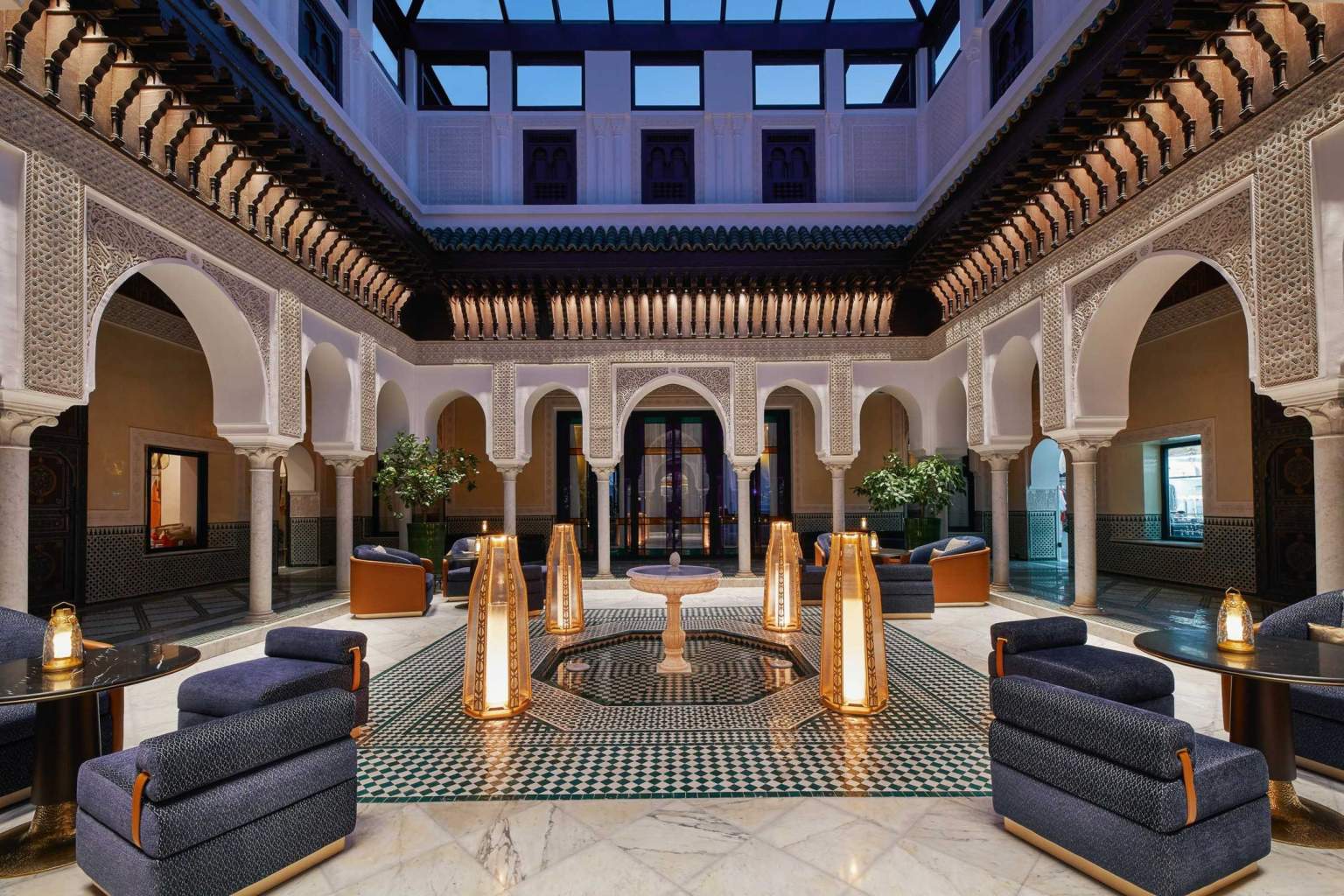
Built around an interior courtyard, often incorporating gardens, fountains, tiles and intricate craftsmanship, the riad has moved from a traditional architectural form into one of the defining experiences associated internationally with Marrakech.
This creates a powerful economic relationship between identity and hospitality.
Visitors do not simply come to Marrakech and stay in accommodation.
They increasingly seek to stay in an interpretation of Marrakech itself.
Marrakech and the World of Fashion
The city’s distinctive aesthetic has attracted international fashion and design for decades.
Yves Saint Laurent’s relationship with Marrakech is one of the best known examples. He first visited the city in 1966 and returned repeatedly, developing a long personal and creative relationship with Morocco.
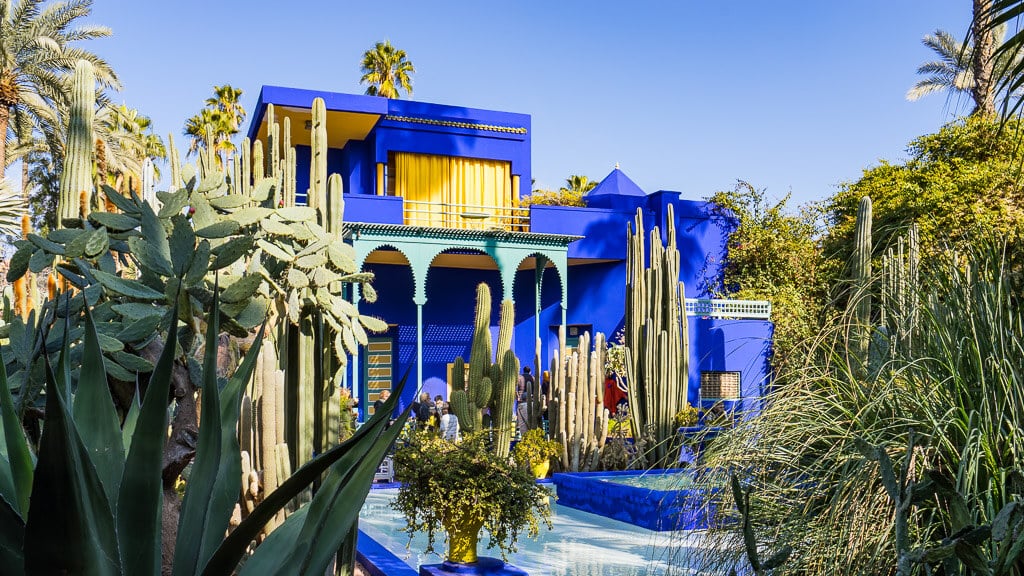
In 1980, Saint Laurent and Pierre Bergé acquired the Jardin Majorelle, originally created by French painter Jacques Majorelle, and helped preserve it from a proposed real estate development.
The garden subsequently became one of Marrakech’s most recognised cultural attractions.
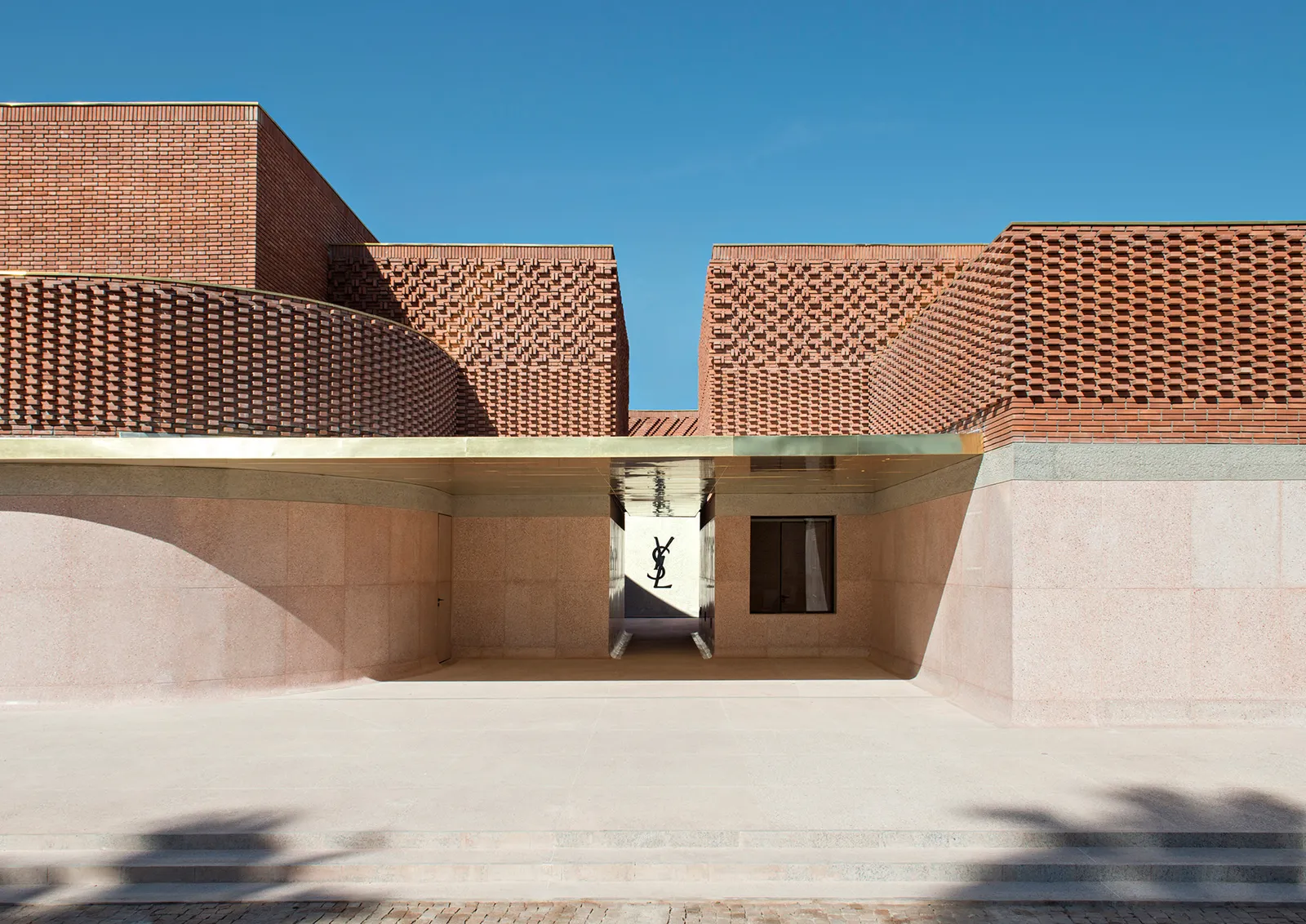
In 2017, the Musée Yves Saint Laurent Marrakech opened beside it. The institution, dedicated to the designer’s work and his relationship with Morocco, added another cultural destination to the city’s international landscape.
The significance of this history is not that an international designer somehow validated Marrakech.
It is almost the reverse.
Marrakech possessed an aesthetic world powerful enough to influence one of the defining designers of twentieth century fashion.
That distinction matters.
The city was not waiting to be discovered.
It was capable of inspiring.
When Global Luxury Comes to Marrakech
That relationship between place and fashion has continued.
In 2019, Dior presented its Cruise 2020 collection at Marrakech’s El Badi Palace.
The choice of location transformed a sixteenth century Moroccan monument into a global fashion stage. But the project also attempted to engage with questions of craftsmanship and cultural exchange, incorporating collaborations involving African designers and craftspeople.
International guests travelled to Marrakech, while images of the palace, the collection and the city circulated through fashion media around the world.
For Marrakech, moments like these are extraordinarily valuable.
A city does not need to announce that it is fashionable when international fashion chooses it as a stage.
It does not need to insist that its architecture is spectacular when that architecture becomes part of the visual language through which global luxury presents itself.
This is one of the most powerful mechanisms of city branding.
The city becomes more than the location of an event.
It becomes part of the event’s meaning.
A Distinctive Model of Luxury
Marrakech has also developed an unusually strong hospitality identity.
Its great hotels, restored palaces, riads and resorts combine international standards of luxury with Moroccan architectural and decorative traditions.
La Mamounia has become an international reference in its own right. Royal Mansour Marrakech was conceived around individual riads rather than a conventional hotel structure. Across the Medina, historic residences have been transformed into intimate hospitality experiences centred on courtyards, gardens and craftsmanship.
The distinction is strategically important.
A luxury hotel can exist almost anywhere.
A luxury experience that could only convincingly exist in Marrakech strengthens Marrakech.
The city has consequently become a platform through which Moroccan craftsmanship is continually experienced by international visitors. Zellige, metalwork, textiles, woodwork, plasterwork and carpets are not confined to museums.
They form part of the visitor experience.
Culture becomes hospitality, hospitality becomes memory, and memory becomes reputation.
Culture Beyond Tourism
Marrakech has also expanded its international cultural profile beyond fashion and hospitality.
The Marrakech International Film Festival has brought filmmakers, actors and international cinema to the city since 2001, adding another layer to its global identity.
This matters because successful city brands rarely depend on one industry.
Fashion reinforces design. Design reinforces hospitality. Hospitality reinforces tourism. Cinema creates imagery. Cultural institutions add credibility. Heritage provides depth.
Each element strengthens the others.
The result is an ecosystem of associations rather than a single message.
Marrakech can simultaneously evoke an eleventh century Medina and contemporary luxury, traditional craftsmanship and international fashion, crowded public spaces and secluded gardens.
These contrasts do not weaken the brand.
They make it richer.
From Cultural Capital to Global Meeting Place
The city’s international role now extends well beyond leisure and culture.
In October 2023, Marrakech hosted the Annual Meetings of the International Monetary Fund and the World Bank Group.
It was a significant moment. The meetings returned to Africa after 50 years, following the 1973 edition held in Nairobi.
This produced a very different kind of international visibility.
Marrakech was no longer welcoming primarily travellers, designers, filmmakers and artists. Finance ministers, central bankers, economists, executives and representatives of international institutions arrived in the city.
Marrakech demonstrated that the same destination capable of projecting heritage and lifestyle could also operate as a stage for global economic diplomacy.
That versatility is one of the clearest indicators of a mature city brand.
The strongest cities create multiple reasons for the world to pay attention.
When Reputation Becomes Economic Value
City branding becomes particularly valuable when reputation translates into behaviour.
Marrakech remains one of the principal engines of Morocco’s tourism economy. Official tourism statistics consistently place the city among the country’s leading destinations for overnight stays and hotel occupancy.
This occurs within a Moroccan tourism sector experiencing remarkable momentum. Morocco welcomed 17.4 million tourists in 2024, according to the Ministry of Tourism, making it a record year for the country.
Marrakech sits at the centre of that international attraction.
Its reputation creates an economic ecosystem extending far beyond hotels. Restaurants, guides, transport companies, artisans, designers, galleries, cultural institutions, property owners and retailers all participate in an economy partly sustained by the international desirability of the city.
This is where brand becomes tangible.
People recognise Marrakech, travel to Marrakech, photograph Marrakech, celebrate in Marrakech, invest in its hospitality and repeatedly reproduce its visual codes.
Reputation becomes economic activity.
Why Marrakech Works
The temptation in place branding is to invent.
A city hires consultants, develops a logo, chooses a slogan and attempts to decide what it wants the world to think about it.
Marrakech suggests another model.
Its strongest assets already existed.
The Medina, Jemaa el Fna, the colour of its walls, Moroccan craftsmanship, gardens, architecture, cuisine, hospitality and the surrounding landscape.
What evolved was the ecosystem around them.
Hotels transformed heritage into experience. Cultural institutions gave creative relationships permanence. Fashion houses transformed monuments into global stages. Festivals created international encounters. Major events transformed hospitality infrastructure into diplomatic capacity.
The result is not one Marrakech, but many expressions of the same city that remain remarkably coherent.
This may be the central lesson for African city branding.
Distinctiveness cannot simply be advertised into existence.
It has to be cultivated.
A City That Became an Idea
Many African cities possess extraordinary cultural assets.
Fewer have succeeded in converting those assets into an international image as immediately legible as Marrakech.
That achievement matters because cities increasingly compete not only for tourists, but also for investment, events, talent, creative industries and attention.
In that competition, familiarity has value.
Marrakech has accumulated it over generations.
More importantly, the city has achieved something difficult. It has become international without becoming culturally anonymous.
Global luxury arrived, but the riad remained. International fashion arrived, but Moroccan craftsmanship remained visible. Global institutions arrived, but the ochre city continued to provide the setting.
The strongest city brands do not ask visitors to forget where they are.
They make place itself the reason to come.
Marrakech did not build its global reputation by replacing its identity with an international one.
It built it by making its own identity international.
